
The absence of a credible international diplomatic initiative to resolve Yemen’s conflict has opened a strategic vacuum that Iran is exploiting. Tehran’s deepening partnership with the Houthis has transformed Yemen from a regional hotspot into a theater of broader geopolitical competition with direct consequences for global shipping, energy markets and regional stability.
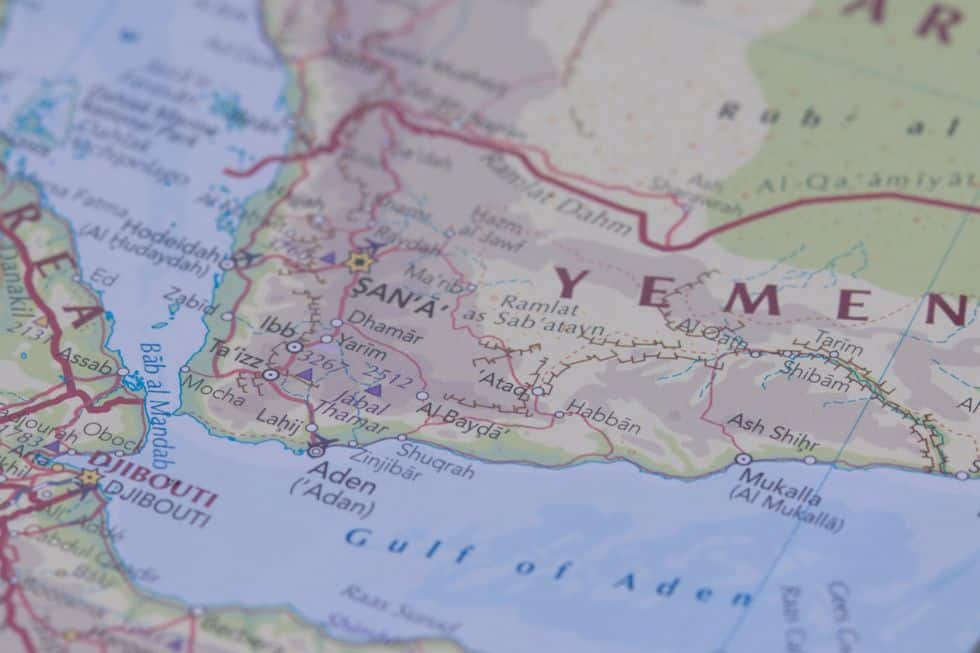
With Iran’s traditional footholds in Syria eroding, Hezbollah weakened in Lebanon, and Hamas’s infrastructure degraded in Gaza, the Houthis have emerged as Tehran’s most active and reliable partner in the Middle East. The IRGC has expanded support beyond tactical aid into long-term networks for arming and advising the movement. These links enable Iran to project influence across the Red Sea, Bab al‑Mandeb and the Gulf of Aden, turning maritime routes into arenas for drone and missile strikes designed to disrupt commerce and pressure Israel and Western allies.
What began as episodic tactical support has hardened into a strategic partnership. Smuggling routes through Oman and the Horn of Africa now move precision weaponry into Yemen, while Houthi capabilities increasingly threaten international shipping and energy infrastructure. Iran’s use of the Houthis preserves plausible deniability while allowing escalation by proxy — a pattern it has used elsewhere in the region.
Much of international attention has rightly focused on Houthi attacks on commercial vessels in the Red Sea. But an equally acute and immediate danger lies to the south. The liberated regions of South Yemen — governed by ideologically moderate institutions and the Southern Transitional Council (STC) — stand as the only realistic counterweight to Houthi control in the north. Those areas now face direct threats: missile strikes, covert operations, and efforts to infiltrate or destabilize through sleeper cells and proxy recruitment.
The Houthis have targeted southern cities including Aden, Shabwa, Dhale and Mukalla, and have struck energy ports, disrupting oil exports and starving the South of foreign currency. Economically strangling the South makes the internationally recognized government dependent on external donors and undermines local governance. Reports also point to attempts to cultivate local proxies and sabotage liberated areas — tactics familiar from Iranian operations in Iraq and Lebanon, aimed at preventing the consolidation of a viable alternative to Houthi rule.
Escalations have prompted kinetic responses. Israeli strikes have shifted from infrastructure to command-and-control targets in Sanaa, including operations that have killed mid-level Houthi commanders. While such strikes may yield tactical gains, they risk driving the Houthis closer to Tehran and further entrenching proxy dependence. Meanwhile, civilians shoulder the human cost: ongoing repression, arbitrary detentions, child soldier recruitment, and attacks that generate widespread suffering and displacement.
A strategic case for supporting a stable, autonomous South Yemen is increasingly evident. The South controls key ports, energy resources and the Bab al‑Mandeb corridor — all vital to global commerce and regional security. The STC has signaled readiness to cooperate with international partners on security and maritime protection; diplomatic outreach by STC leaders to Washington and European capitals underscores both their willingness to engage and their alarm over northern threats.
Backing the South is not charity; it is a security investment. A functioning, sovereign South Yemen could secure southern ports, deter attempts to choke trade routes, and present a political alternative to Houthi‑dominated northern governance. Supporting capacity-building, governance, and economic resilience in the South would reduce the appeal of proxies and blunt Tehran’s ability to leverage instability for regional leverage.
International policy, however, remains episodic. Responses have focused on short-term military containment — naval escorts, strikes against Houthi missile and drone storage, and sanctions — without a coherent political strategy to bolster local governance, economic recovery and durable security arrangements in the South. Absent such a strategy, Yemen risks remaining a fragmented space where external actors exploit instability to advance broader strategic aims.
Any effective approach should be multidimensional: sustain pressure on Houthi capabilities that threaten international shipping; cut off illicit weapon flows and smuggling networks; protect southern infrastructure and ports; and invest in the political and economic capacity of southern institutions that are prepared to partner with the international community. Humanitarian assistance must accompany security measures to alleviate civilian suffering and prevent the conflict’s further radicalization.
Yemen sits at the intersection of regional realignment, great‑power competition and proxy warfare. The Houthis today are more than a local faction; through their alliance with Iran they have become a lever of regional coercion with global consequences. For the international community, the real test is not merely condemning attacks, but enabling the only credible alternative that can secure the Red Sea corridor and deny Tehran unimpeded influence: a stable, autonomous South Yemen capable of defending its territory and contributing to maritime and regional security.
The urgency is twofold. First, unchecked Houthi action threatens trade and energy flows critical to the global economy. Second, the humanitarian toll inside Yemen will continue to deepen if political solutions remain out of reach. Empowering southern governance structures, cutting the supply chains that arm proxies, and combining targeted military pressure with diplomatic engagement offer the most realistic path to reducing both regional tensions and human suffering.
In short, the southern front is a strategic fault line — one that global actors cannot afford to ignore. Aligning international policy behind a stable South Yemen is not simply a regional concern; it is a necessary step to protect global commerce, deter malign influence, and open space for a political resolution that might finally relieve the country’s prolonged catastrophe.