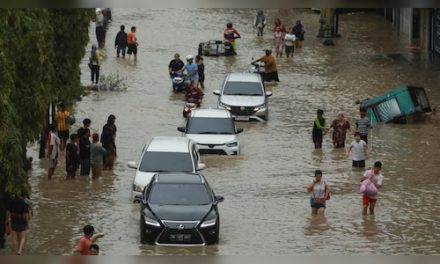
In late October, Hurricane Melissa — a Category 5 storm with winds near 185 mph — devastated western Jamaica, ripping roofs off buildings, destroying hospitals and municipal structures, snapping utility poles, wrecking crops and leaving roughly $8 billion in damage. The storm’s unprecedented ferocity was fueled by an overheated Caribbean Sea — the result of centuries of industrial carbon emissions that have warmed oceans and atmosphere. For many Jamaicans, civilization as they knew it was shredded: half a million people faced prolonged power outages and looming food shortages as homes and livelihoods vanished.
At roughly the same moment, Bill Gates published a reflection urging those alarmed by climate change not to succumb to “doomsday” rhetoric — insisting climate change would not destroy humanity. This was a misdirection. Scientists and activists are not predicting human extinction but are warning that rising temperatures will decimate infrastructure, livelihoods and civic order in many regions. When communities are left without power, shelter or food because of climate-driven megastorms, the lived reality is one of severe loss of “civilization” even if the species survives.
Gates’s comments matter because the high-tech billionaires he symbolically represents wield outsized influence on public debate and policy. They also have a material stake in the path the energy transition takes. The rise of artificial intelligence — and the data centers that underpin it — has created massive new electricity demand. NVIDIA’s chips, central to AI computing, helped make that firm the first $5 trillion company, and an AI-driven investment boom has produced a new alignment between Silicon Valley’s fortunes and an energy-intensive model of growth.
That model is environmentally costly. MIT researchers estimate that by 2026 data center electricity use could approach 1,050 terawatt-hours, comparable to the consumption of large countries. By 2030, a significant share of electricity demand could be driven by new data centers. MIT’s Noman Bashir warns that current trends in data-center construction are not compatible with a sustainable electricity supply — the bulk of that power would, absent rapid change, come from fossil-fuel plants. If true, that creates a monetary motive for tech firms and their backers to slow global efforts to decarbonize, aligning their interests with fossil-fuel producers and weakening support for climate science and policy.
That weakening is visible in several places. In the United States, reductions in government science capacity and politicized firings have left agencies like NOAA understaffed; volunteers were reportedly pressed into service tracking Melissa. At the same time, political choices — such as policies favoring expanded fossil-fuel use — reduce pressure on major emitters to accelerate transitions to low-carbon energy. The consequence: more emissions, faster heating, and larger storms.
The climate trajectory we’re on remains perilous even with recent progress. The UN has judged that current policies place the world toward a 2.8° C rise over preindustrial temperatures by 2100, an improvement from earlier projections but still far above the 1.5° C limit scientists say matters most for avoiding catastrophic shifts. Meeting current Paris Agreement pledges would trim that warming somewhat more, but not to safe levels. The International Energy Agency reported that energy-related CO2 emissions rose to a record 37.8 gigatons in 2024 — we are still emitting more each year, not less.
The urgency of short-term action stems from the carbon budget: only a limited amount of CO2 can be emitted if we want a decent chance of keeping warming near 1.5° C. As of 2025, estimates suggested roughly 130 billion tons of CO2 remained in that budget — at current emissions rates, that would be exhausted within a few years. Even to hold to a 1.7° C limit would burn through allowable emissions in a decade. Once those budgets are spent, temporary fixes become harder and risky climate feedbacks — such as reduced ocean uptake of CO2 — grow likelier.
The oceans have so far buffered much warming by absorbing heat and carbon dioxide. But their capacity is limited and declining: warmer surfaces reduce solubility for CO2; acidification and warming can suppress phytoplankton, which fix carbon and help sequester it. As the ocean sink weakens, more emitted CO2 will linger in the atmosphere for centuries, exacerbating warming and associated extremes.
Those extremes include more powerful tropical cyclones. Scientists find that storms like Melissa are already stronger than they would have been absent human-caused warming — in Melissa’s case, roughly a third more powerful. If the Caribbean and other seas continue to heat, wind speeds, rainfall intensity and storm surge will escalate nonlinearly. Some scientists argue that our five-category hurricane scale may become inadequate and that a new Category 6 should be contemplated as storms push beyond historical bounds.
Heat and humidity risks are equally alarming. The wet-bulb temperature — a measure combining heat and humidity that determines whether sweating can cool humans — defines hard limits to survivability. If local wet-bulb conditions exceed roughly 35° C (95° F wet-bulb), humans can no longer cool by sweating and face lethal heat stress. Models suggest parts of the globe could regularly approach or exceed such thresholds if warming reaches several degrees, threatening habitability in regions that now host millions. Even midlatitude areas, including US Midwest states, may cross dangerous wet-bulb thresholds within decades, imperiling agriculture, labor and human life.
Meanwhile, climate-driven displacement is poised to swell. Projections indicate that by 2050 hundreds of millions may need humanitarian assistance yearly due to climate impacts — droughts, floods, storms, food system collapse and conflict over resources. For low- and middle-income countries like Jamaica, the immediate cost is staggering: infrastructure repair, lost harvests, public-health crises and increased poverty. For wealthy nations, the costs are security, migration pressures, economic disruption and domestic social stress.
Given this, complacent reassurances framed as anti-“doomsday” talk are dangerous when they diminish political will for aggressive mitigation. Gates’s claim that fears of civilization’s decimation are overwrought sidesteps the real question: how much human suffering, institutional breakdown and economic loss are acceptable? The answer from science and ethics is that we must act quickly to avoid the worst outcomes — cutting emissions sharply now, not later.
That imperative includes confronting the energy appetite of new technologies. AI and data centers can be part of a decarbonized future — if they are powered by low-carbon electricity, sited where renewable power and efficient cooling reduce impacts, and designed to prioritize energy efficiency. But unchecked expansion of energy-hungry computing, built atop fossil-fuel generation, will turbocharge emissions and undermine any gains from other sectors.
Mitigation must be paired with adaptation: hardening infrastructure, protecting communities, investing in resilient agriculture, and funding recovery for the most vulnerable. Rich countries and corporations that profited from fossil-fuel-driven industrialization have moral and practical obligations to finance adaptation and rapid decarbonization. Limiting the roll-out of new, energy-intensive infrastructure where it would lock in fossil-fuel dependence is a legitimate policy choice. If that slows certain tech deployments — including the explosive growth of data centers — so be it; our planet’s livability must trump unchecked technological expansion.
We do have tools to limit harm — renewables, electrification, efficiency, grid upgrades, storage, demand management and regulatory limits on new, dirty infrastructure. But their implementation requires political will, public pressure and the sidelining of narratives that prioritize billionaire interests over planetary limits. The “blue screen of death” metaphor from computing — that catastrophic failure can be fatal and unfixable by a restart — applies to Earth: crash its climate system beyond certain thresholds and there is no reboot.
Hurricane Melissa is a warning, not a curiosity: a measure of how warming is already reshaping weather extremes and exposing inequities in who suffers most. The math of carbon budgets, the physics of oceans and atmosphere, and the economics of tech expansion together make the case for urgent, broad-based action. We must cut near-term emissions fast, curb the unchecked growth of fossil-fuel demand (including for data centers unless powered cleanly), shore up vulnerable communities, and defend climate science from political and commercial attack. The choice is stark: a managed transition to a stable climate and preserved civilization, or a future where storms, heat and displacement increasingly erode the foundations of modern life.