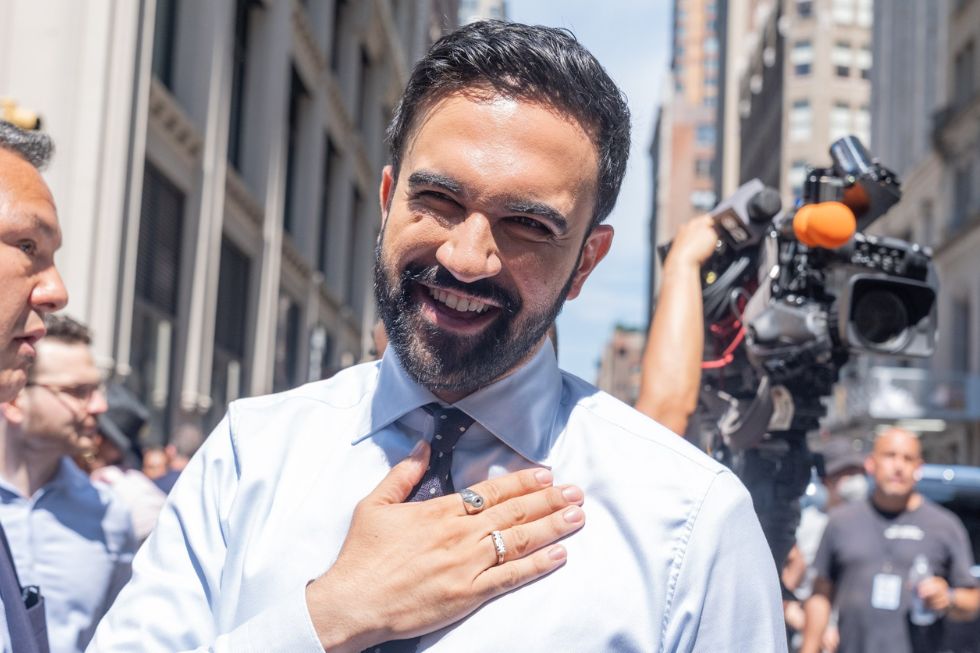

Zohran Mamdani’s victory as New York City’s mayor surprised many. A Muslim born in Africa who calls himself a “democratic socialist” winning the city that hosts Wall Street seemed implausible to older observers who were raised to fear socialism. Polling even suggested large numbers of New Yorkers said they would leave the city rather than live under Mamdani. Yet Peter Thiel, the PayPal and Palantir founder and a pillar of Silicon Valley, offered an unexpected response: don’t just dismiss these voters — try to understand them.
Thiel framed Mamdani’s win as a symptom of a broader political shift he calls a “multi-decade political bull market.” As a venture capitalist, Thiel naturally thinks in market metaphors: politics, like markets, swings between bull and bear phases. His point — offered publicly and in private correspondence — is that young people increasingly see capitalism as failing to deliver and are receptive to alternatives. Thiel says dismissing millennials and Gen Z as “stupid” or “entitled” is strategically and intellectually foolish; instead elites should ask why so many young people favor socialism.
The bull-market metaphor invites scrutiny. What does it mean to apply an investor’s language to civic life? Political engagement is not an asset to be traded; it’s about the institutions and policies that shape collective existence. Still, Thiel’s economic framing is revealing: he sees society through the lens of market actors and competitive advantage. That view helps explain why he worries about losing influence in a changing political climate even as he remains part of the elite that benefits from the status quo.
Thiel’s appeal for empathy toward Mamdani’s voters is striking because it comes from a figure who, on other fronts, has adopted apocalyptic rhetoric. In recent public remarks he has described an “Antichrist” — a catch-all label for what he regards as anti-progress or Luddite impulses that would constrain technological development. To him, those calling for restraints on AI, tighter regulation of tech, or caution about technological risks are modern-day enemies of progress. He singles out figures who advocate for limits or governance — from researchers concerned about AI safety to high-profile philanthropists — as either the Antichrist or “legionnaires” of that force.
Thiel’s critique targets those who urge restraint on the commercialization and unregulated expansion of Silicon Valley technologies. He argues that calls to slow or regulate AI and related technologies amount to an ideological desire to ban science. This is partly rhetorical: when Thiel talks about “science,” he typically means marketable technology and the tools that create private value. He resents those who, in his view, put public interest or existential risk ahead of technological development that benefits private firms and investors.
This stance sits uneasily beside Thiel’s recognition that economic systems are failing many young people. He can simultaneously say, “Understand why they are attracted to socialism,” and denounce as Antichrist anyone who would slow the tech machine that helped create current inequalities. The contradiction reveals a deeper tension in Silicon Valley: empathy for political discontent can coexist with hostility toward those who argue for democratic or regulatory checks on tech power.
Palantir is a useful example of Thiel’s worldview. The company’s stated mission — to help institutions solve critical problems — often translates into close partnerships with powerful state actors, surveillance systems, predictive policing tools and, at times, military operations. Critics note Palantir’s orientation toward institutional power and argue that it places organizational objectives above the rights and welfare of individuals. Palantir executives have openly embraced the idea that, when necessary, their tools should be used to intimidate and even kill enemies. For Thiel and allies like Palantir’s leadership, technology is a means of controlling threats to institutions — a view that aligns with a security-first, institution-centric conception of public life.
So where does that leave Thiel’s position on Mamdani and his voters? The paradox is political and moral. On one hand, Thiel urges his own class — other wealthy financiers and tech magnates — not to reflexively denigrate the young voters who backed Mamdani. He warns that labeling the mayor-elect as a “jihadist,” “communist,” or simply “ridiculous” reveals a lack of policy imagination about problems like housing and student debt. If elites only offer condemnation, they will continue to lose ground.
On the other hand, Thiel’s larger political project often leans toward protecting the prerogatives of elites and technological expansion. He treats those advocating for social and regulatory constraints on tech as enemies of civilization, even suggesting at times cynical views about the value of the human species. That posture — investment-minded, institution-first, and sometimes apocalyptic — frames his response to political change as primarily defensive: preserve technological progress, protect institutional authority, and, if necessary, use powerful tools to neutralize threats.
That mix generates a rhetorical and ethical puzzle. Can a billionaire who funds surveillance technology and embraces the notion of elite control genuinely urge empathy toward a movement that seeks structural change? Thiel’s call to “try and understand why” Mamdani won can be read two ways: as a tactical counsel to change messaging and policies to regain favor with younger voters, or as a genuine plea to engage with underlying grievances. Either way, the message is notable because it breaks with the reflexive elite instinct to scorn populist or left-wing insurgencies.
Thiel’s demonology — identifying an Antichrist composed of AI skeptics, philanthropists worried about existential risk, and climate activists — also exposes the cultural fault lines of our moment. For Thiel, technofeudalists and their defenders must guard against what they see as moralistic limitations on innovation. Opponents, meanwhile, see Thiel and his ilk as reckless, prioritizing profit and power over democratic accountability and human welfare. The debate over AI governance, philanthropy, data privacy, and the public role of tech companies is not merely technical; it is moral and political.
In the end, Thiel’s exhortation to his peers — to listen rather than simply condemn — is worth considering, if only because dismissiveness rarely wins hearts or solves policy failures. But his simultaneous vilification of those who pursue restraint complicates the sincerity and implications of that counsel. If elites pay attention, will they respond with substantive reforms addressing housing, debt and inequality? Or will they instead seek new ways to preserve influence while co-opting or neutralizing dissent?
As Americans and political actors ponder the meaning of Mamdani’s victory and the reactions it provoked, one question stands out: will anyone heed Thiel’s appeal to understand why millions of young people are drawn to alternatives, and if they do, will that lead to meaningful change or merely better messaging? The irony is plain: the man who warns of an Antichrist bent on banning “science” simultaneously insists that political elites must get smarter about the causes of discontent. Which impulse wins out — empathy or entrenchment — may tell us as much about the future of American politics as the election itself.