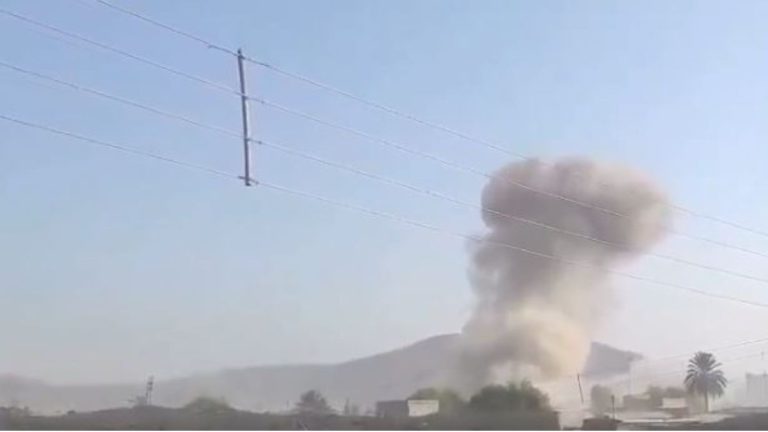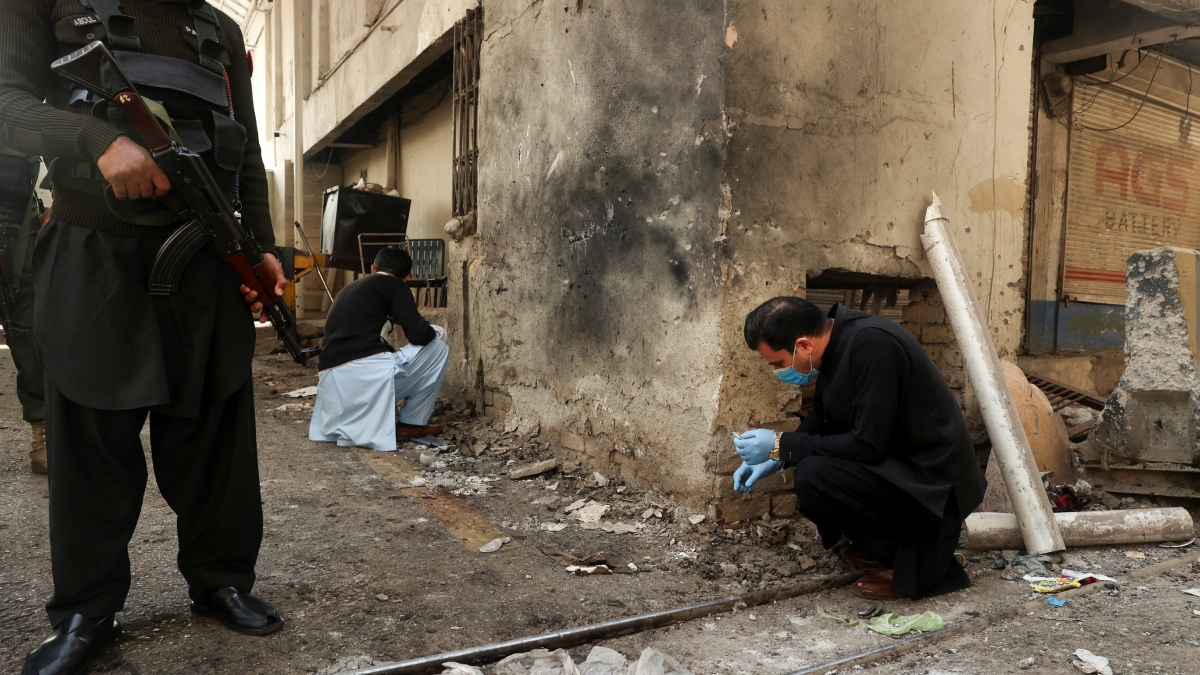

In less than two weeks after Pakistan’s Army Chief, Field Marshal Asim Munir, consolidated powers by amending the constitution, powerful explosions struck the front gate of the paramilitary Frontier Constabulary (FC) in Peshawar on Monday morning, killing at least three people, including a suicide bomber.
Peshawar, capital of Khyber Pakhtunkhwa province, is a key area for the banned Tehreek-i-Taliban Pakistan (TTP), also called the Fitna-al-Khawarij by the state. The group has been resurging recently. The attack, which occurred between 8 and 9 a.m., signals that challenges to Munir’s authority may be emerging and his control is not assured.
A TTP-affiliated social media account claimed responsibility, saying: “Our martyrdom-seeking mujahedeen attack on the headquarters of the Federal Constabulary in Peshawar… as a result of which dozens of officers have been killed and wounded.” The TTP seeks full implementation of Sharia in Pakistan.
In September the TTP attacked the FC headquarters in Bannu, about 190 km southwest of Peshawar, killing six soldiers. Monday’s strike underscores that the banned group can target high-security zones and operate with relative impunity.
Munir’s recent moves—creating the Federal Constitutional Court (FCC), assuming expanded powers, and reducing the Supreme Court’s oversight—may have secured legal authority but have not eliminated security threats. Pakistan faces a dual security challenge: the TTP in the northwest and an active Baloch resistance in the south and southwest. The TTP’s influence in neighboring Afghanistan and cooling ties between Islamabad and the Taliban in Kabul worsen the situation and stretch military resources across both western and eastern borders.
Beyond security, Munir’s Pakistan confronts economic strain—high inflation, rising debt, and currency depreciation—leading Islamabad to seek aid from the IMF, the US, China, and Gulf states. Politically, jailed former prime minister Imran Khan and his Pakistan Tehreek-e-Insaf (PTI) remain influential and pose a significant challenge to the military establishment, with popular sentiment still viewing Khan as a future leader.
Strategically, Munir will need deft diplomacy to balance relations with the US and China while managing tense ties with India and Afghanistan.