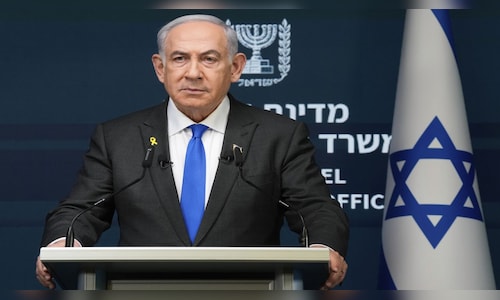

Israeli Prime Minister Benjamin Netanyahu on Sunday, November 30, asked the country’s president for a pardon from corruption charges, aiming to end a long-running trial that has deeply divided Israel.
Netanyahu, who has repeatedly clashed with the legal system over the allegations, said the request was intended to help unify the nation amid major regional developments. The filing drew immediate criticism from opponents, who argued a pardon would erode democratic institutions and signal that leaders are above the law.
According to the prime minister’s office, Netanyahu submitted a pardon request to the legal department of the Office of the President. The president’s office described it as “extraordinary” and said it carried “significant implications.”
Netanyahu is the only sitting Israeli prime minister to face a criminal trial. He is charged in three cases with fraud, breach of trust and accepting bribes, accused of trading favors with wealthy political supporters; he has not been convicted. He denies the charges, calling them a media, police and judiciary-orchestrated “witch hunt.”
The request follows public encouragement from U.S. President Donald Trump, who in recent weeks urged Israel to pardon Netanyahu and sent a letter to President Isaac Herzog describing the corruption case as “political, unjustified prosecution.” Herzog, once a political rival of Netanyahu, has maintained a working relationship with him.
In a videotaped statement, Netanyahu said the trial has been a source of national division and that obligatory appearances in court three times a week hamper his ability to govern. “The continuation of the trial tears us apart from within, stirs up this division, and deepens rifts,” he said, adding that ending it would help calm the country and promote reconciliation.
Netanyahu has testified several times over the past year, though proceedings have been repeatedly delayed as he dealt with wars and unrest following the Hamas-led attacks on southern Israel on October 7, 2023.
His pardon submission consisted of two documents: a detailed letter from his lawyer and a letter signed by Netanyahu. The files will be sent to the Justice Ministry for opinions and then to the president’s legal adviser, who will prepare additional recommendations for the president.
Legal experts say a pardon request cannot halt an ongoing trial. Emi Palmor, a former director-general of the Justice Ministry, called such relief “impossible” while proceedings continue, arguing one cannot maintain innocence in court and simultaneously ask the president to intervene. She noted the only route to stop the trial would be for the attorney general to withhold the case.
While the president has broad discretion to grant pardons and oversight is limited, preconviction pardons are extremely rare. The Israel Democracy Institute warned that reviewing a pardon before all legal proceedings conclude “threatens the rule of law and seriously undermines the principle of equality before the law.”
Netanyahu’s stance contrasts with his 2008 position during Ehud Olmert’s corruption scandal, when he said a prime minister “up to his neck” in scandal lacked a mandate to lead. Olmert resigned before indictment and later served 16 months in prison.
Since his legal troubles began, Netanyahu has taken a defiant tone, portraying himself as a victim of a “deep state” conspiracy. After forming his current government in late 2022, he launched a plan to overhaul Israel’s justice system—framing it as necessary reform, while critics said it aimed to weaken checks and balances and presented a conflict of interest given his trial. The reforms sparked large street protests, and critics argued the resulting divisions signaled weakness that contributed to the environment that led to Hamas’s 2023 attacks.
Netanyahu’s pardon petition provoked strong reactions from the opposition and civil society. Opposition leader Yair Lapid said a pardon should not be granted without an admission of guilt, remorse and immediate retirement from political life. The Movement for Quality Government in Israel warned that pardoning a prime minister accused of serious offenses would convey that some citizens are above the law.
At the same time, some supporters voiced approval. “Bibi Netanyahu did the right thing requesting the pardon,” said Lior Gal, a Jerusalem resident using the prime minister’s nickname. “He deserves to be pardoned. This chapter should be over, and we should remain united and carry on.”