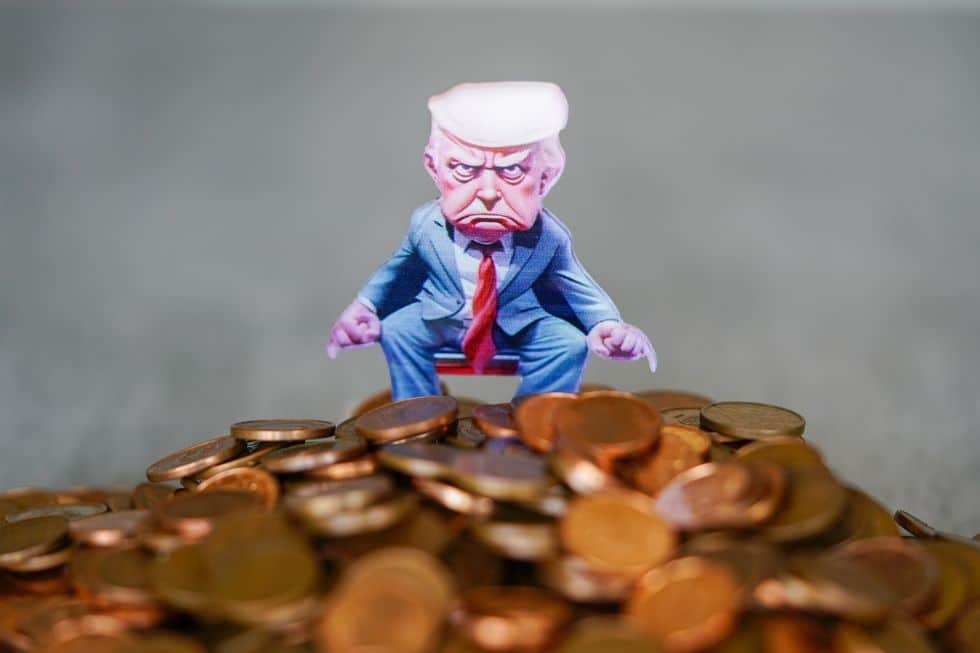

A Business Insider video from January asked: “Will Trump’s billionaire brigade run America like a tech startup?” Its reporter Peter Kafka concluded we are “in a post conflict-of-interest world.” Politico’s Derek Robertson agreed, arguing that the ultra-wealthy around Donald Trump are essentially setting policy in fields they can profit from. The comment captures a widely felt shift: conflicts of interest used to be managed or hidden; now they are declared, normalized, and instrumental.
Recent reporting shows six Americans now worth more than $200 billion — Elon Musk, Larry Ellison, Jeff Bezos, Mark Zuckerberg, Larry Page and Sergey Brin — people who share networks, influence and, reportedly, phone numbers with the president. Their presence at the center of policy conversations exemplifies how private fortune has become public power. “Interest” here is a multi-layered word: curiosity, concern, and, more importantly, intent to influence.
Why would billionaires invest time and energy in politics rather than indulge private pleasures? Because political influence multiplies private advantage: policy, regulation, procurement, and public narrative can all be tilted to protect or expand fortunes. For ordinary people, power and money often mean comfort; for the very rich, they also mean the ability to embed their interests structurally into governance.
This is not, strictly speaking, new. Michael Douglas’s Gordon Gekko in Wall Street memorably proclaimed, “Greed is good,” a line that translates in Washington to “conflict of interest is acceptable.” The practice has long roots: presidents and politicians have had private stakes that intersected with public policy. Lyndon B. Johnson, for instance, retained investments related to defense and media while presiding over the Vietnam escalation. But what has changed is scale, speed and openness. Where decorum once hid mutual advantage, we now witness brazen self-dealing and a political culture that treats personal enrichment as neither scandalous nor disqualifying.
Both parties share responsibility. Corbin Trent’s critique of Democrats — that they defended a “moral order” tolerating egoistic capitalism while hoping to return to a comfortable “normal” — is a useful corrective to the idea this is merely a Republican failing. Democrats long tolerated, and sometimes cultivated, the influence of wealth through think tanks, policy shops and revolving-door relationships with industry and academia. The difference under Trump is rhetorical: exploitation is advertised, not merely managed quietly.
Think tanks and academic institutions illustrate the “conflict of intellectual interest.” Many present as neutral research bodies while operating as engines of influence — staffed, funded or partnered with corporate interests and donors whose economic aims inform policy recommendations. The result is an intellectual ecosystem that too often rationalizes or conceals structural conflicts rather than exposing them.
Are there exceptions among the wealthy? Yes. Charles Feeney, cofounder of Duty Free Shoppers, famously gave away his fortune and lived modestly. But such cases are rare and often fall outside the media’s attention to the interplay between wealth, image-making and policy influence. Bill Gates’s trajectory from monopolistic businessman to celebrated philanthropist offers a clearer case study in how image and influence are manufactured and then contested.
Gates reinvented himself through “philanthrocapitalism”: applying managerial metrics and market logic to charitable endeavors, and recruiting Warren Buffett to amplify the message. This repackaging gave predatory corporate success an air of redemption — a public relations rehabilitation that framed enormous wealth as a source of public goods. For a time, Gates was a model of the “good billionaire,” applying efficiency and data-driven models to education and global health.
That halo dimmed. Investigations revealed the Gates Foundation’s investments in companies whose practices harmed environmental and social well-being. Then revelations about Gates’s ties to Jeffrey Epstein eroded public trust further and even precipitated personal fallout. The Gates case shows how philanthropic influence can mask structural power imbalances: epic private wealth enables actors to shape priorities, fund research, sway international institutions and set agendas, all without electoral accountability.
If philanthropy can be a conduit for influence, so can formal government roles. The example of Dick Cheney is instructive. Upon his death, some eulogized his public service; a closer look shows a different alignment. Cheney had deep ties to Halliburton, his former employer. He continued to receive deferred compensation, retained stock options, and his administration presided over massive Halliburton contracts — often awarded with limited competition — related to the wars in Afghanistan and Iraq. Kellogg Brown & Root, a Halliburton subsidiary, received billions in no-bid or limited-bid contracts for logistics and reconstruction. The human cost of policies that benefited private contractors was enormous, and the financial rewards to corporate insiders stark.
Trump’s administration did not invent the problem but made it obvious and unapologetic. Where previous custodians of Washington decorum could keep private advantage out of the headlines, Trump and his circle turned transactional politics into public spectacle. The result is a system in which private financial ties at the highest levels of government are vast and routine; what once merited oversight is now treated as ordinary governance.
This normalization has consequences. Democracy presumes a separation between public duty and private gain, however imperfectly enforced. When the wealthy write the rules, influence becomes a property right rather than a civic challenge to be managed. Policy debates shift from public interest to portfolio optimization. Regulatory capture, procurement favoritism and the endemic presence of representatives who move easily between public office and private boardrooms degrade public faith.
The problem is structural. Wealth converts into structural power — not always through direct bribery or illicit deals, but through networks, think tanks, media savvy, philanthropic agendas, and personnel flows between private firms and public institutions. The machinery of modern influence includes PR professionals adept at recasting self-interest as public virtue, foundations buying platforms and legitimacy, and firms harvesting government contracts under the cloak of national need.
Addressing this requires more than moralizing about individual villains. It means rethinking rules on conflicts of interest, transparency in appointments and finance, procurement practices, the influence of philanthropy on public policy, and the flow of personnel between government and industry. It also means reviving public institutions — courts, regulatory agencies, watchdogs — sturdy enough to resist captured governance.
For now, the spectacle continues: centibillionaires shaping policy; a president comfortable with direct ties to private fortunes; a political class that often seeks to preserve a system where influence is fungible and manageable. Whether reformers can convert outrage into institutional change remains the central political question. Until then, we inhabit a post-ethics era where conflicts of interest are not merely a lapse but a functioning feature of how power is exercised.