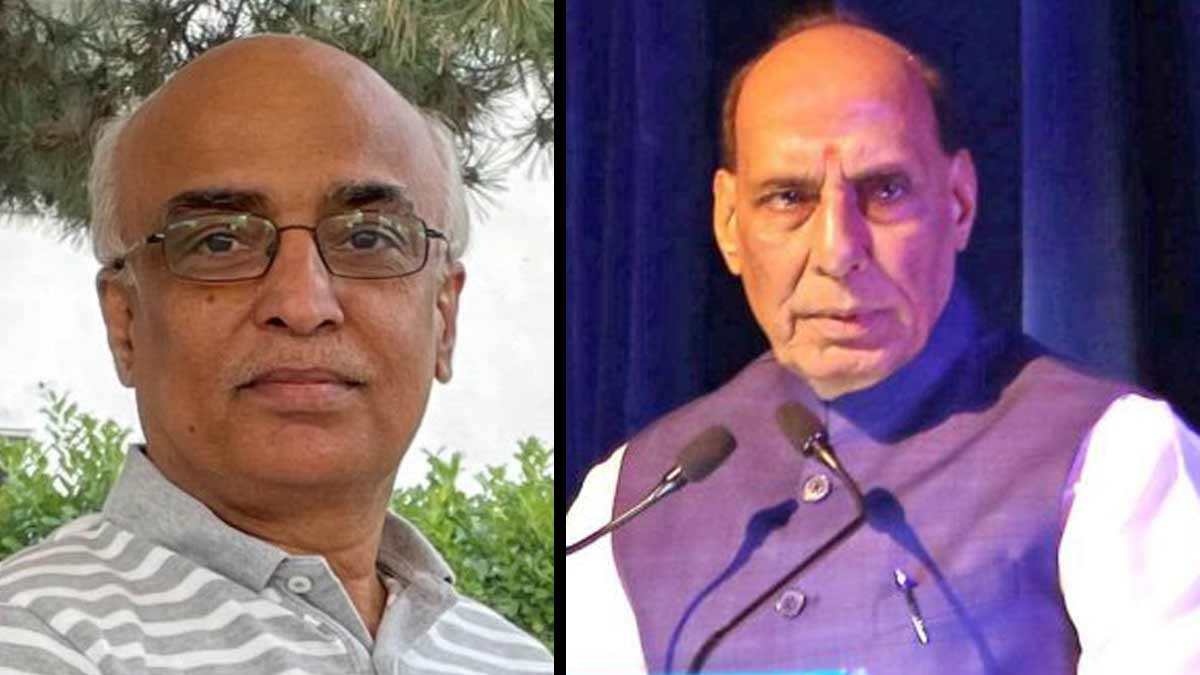

Even as Defence Minister Rajnath Singh’s remarks about Sindh drew a sharp reaction from Islamabad, a prominent Sindhi leader welcomed them and said the region remains open to forming a confederation with India. Shafi Burfat, chairman of the Jeay Sindh Muttahida Mahaz (JSMM), said, “We strongly acknowledge and appreciate his remarks made at the event organised by the Vishwa Sindhu Foundation.”
Singh suggested at the Delhi event that Sindh, which became part of Pakistan in the 1947 Partition, could one day return to India, stressing India’s deep civilisational links with the region and saying Hindus had never emotionally accepted the Partition-induced separation.
Burfat reiterated the JSMM’s stance that Sindhudesh is open to a confederation with India based on mutual respect, sovereignty, and shared historical, cultural, and civilisational ties. In a post on X, he described Sindh as the historical homeland of the Sindhi nation and “the cradle of human civilisation,” asserting that Sindh’s roots have long been linked with the land of Sapt Sindhudesh, India. He claimed Sindh’s people were never historically tied to Arab or Turkic powers by religion or ideology.
Burfat alleged that within Pakistan, Sindh’s language, identity, and heritage face state-sponsored threats, accusing “Punjabi imperial interests” and a militarised establishment of occupying river, coastal and agricultural areas, exploiting resources, and attempting demographic changes. He called Rajnath Singh’s comment “a ray of hope for the national unity, survival, security, and the re-emergence and completion of the Sindhi nation.”
Pakistan strongly condemned Singh’s remarks, calling them “delusional” and “dangerously revisionist.” The Foreign Ministry said such statements reflected an “expansionist Hindutva mindset,” violated international law, and threatened state sovereignty.