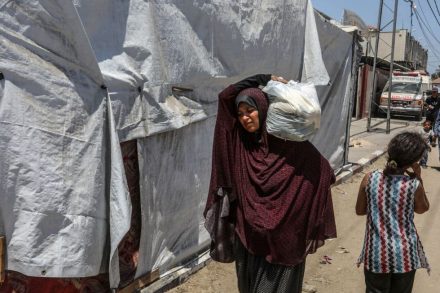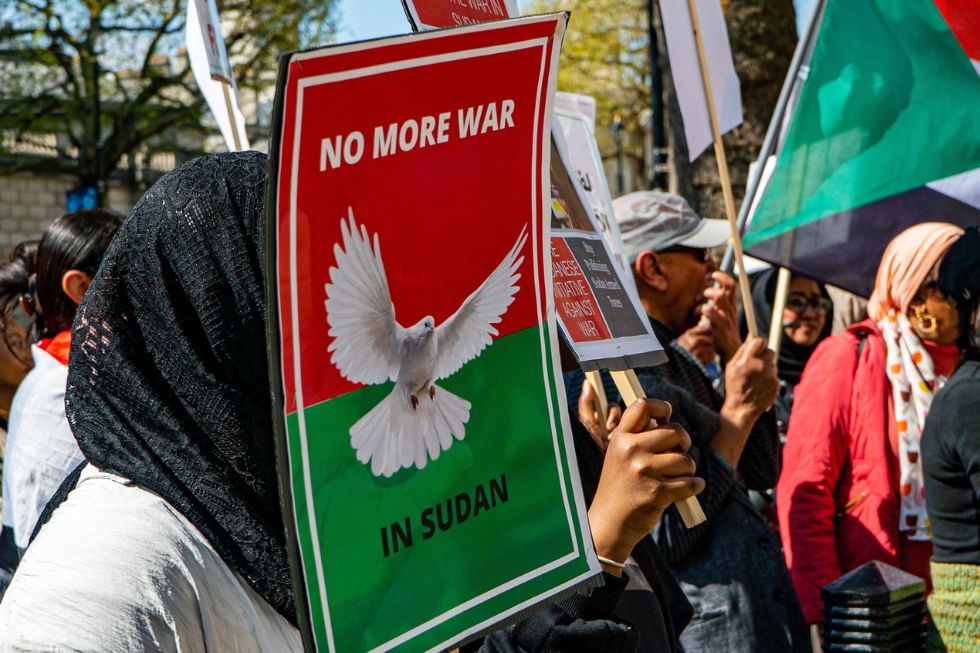

Sudan’s civil war took a darker turn when the paramilitary Rapid Support Forces (RSF) seized El Fasher, the last major Sudanese Armed Forces (SAF) stronghold in Darfur. The city had been under RSF siege since May 2024; carpet bombing by the SAF, famine conditions and now the RSF’s capture have left hundreds of thousands of civilians exposed to starvation, summary killings and mass executions reminiscent of the 2003 Darfur atrocities carried out by Janjaweed militias.
El Fasher’s fall has trapped more than 260,000 people, according to multiple reports. Satellite imagery analyzed by Yale University’s Humanitarian Research Lab shows patterns consistent with mass killings and with killings of people attempting to flee. The UN Human Rights Office and other bodies have reported atrocities against unarmed civilians in and around the city. UN High Commissioner for Human Rights Volker Türk warned that the risk of large-scale, ethnically motivated violations and atrocities in El Fasher is mounting daily and called for urgent action to protect civilians and ensure safe passage for those seeking safety.
The RSF is led by Mohamed Hamdan Dagalo (Hemedti), who rose from the Janjaweed militia networks long accused of ethnic massacres. That past—and the RSF’s conduct since the 2023 outbreak of nationwide fighting—has revived fears of a new genocidal campaign in Darfur. Decades of conflict in the region have included rape, village burnings and ethnic killings; human rights groups estimate hundreds of thousands were killed in earlier phases of Darfur’s violence, and the current collapse of order has pushed some 30 million Sudanese into urgent need of humanitarian assistance.
International monitors and rights groups, including Amnesty International, have urgently demanded that the RSF stop attacks and allow immediate, unfettered humanitarian access. The UN and others have pressed for opening aid corridors to deliver food, medicine and fuel to besieged populations. But global response has been weak and inconsistent; pressure on external backers of the RSF has so far been limited.
The United Arab Emirates has emerged as a central—and controversial—actor in the crisis. Abu Dhabi invested heavily in Sudan’s agriculture, mining and shipping sectors and is accused of supporting the RSF to protect economic interests, including access to gold resources controlled by figures close to Hemedti. UN panels and leaked intelligence reports point to hundreds of cargo flights from the UAE to neighboring countries such as Chad and Somalia, from where weapons, drones, ammunition and vehicles are alleged to have been transferred to the RSF. Reports have also implicated the UAE in facilitating recruitment of foreign fighters.
The UAE has denied these accusations, calling them politically motivated. It has pushed back against international scrutiny, including challenging Sudan’s ICJ case alleging complicity in genocide and canceling diplomatic meetings after UN criticism. Khartoum severed ties with Abu Dhabi in May. Nonetheless, the evidence assembled by UN experts, rights organizations and investigative reporting suggests the UAE’s logistical and material support has materially prolonged fighting and enabled abuses.
What is required now is a decisive, coordinated international response to prevent further mass atrocity and to create space for aid and accountability.
Immediate steps that should be taken:
– Secure humanitarian access: An immediate, monitored ceasefire and the opening of secure, protected aid corridors into El Fasher and other besieged areas must be enforced so food, medical supplies and fuel can reach civilians.
– Target enabling networks: The UAE and other states or private actors found to be supplying weapons, drones, mercenaries or logistical support to the RSF should face concrete consequences. Authorities should freeze RSF-controlled assets, particularly gold refinery and mining revenues. The EU and US should consider secondary sanctions on firms and intermediaries complicit in supplying or financing the RSF.
– International legal action: The RSF and its commanders should be investigated and, where evidence supports it, referred to the International Criminal Court for war crimes and crimes against humanity. The UN should immediately dispatch an independent fact-finding mission to document atrocities in El Fasher and collect evidence for future prosecutions.
– Multilateral humanitarian truce: The U.S.-Saudi-UAE-Egypt “Quad” and the wider international community should press for and enforce a time-bound humanitarian truce—proposed here as 90 days—to allow lifesaving relief to reach civilians and to create conditions for negotiations.
– Regional cooperation to halt facilitation: Neighboring states (Chad, Libya, Somalia) must seal borders and deny landing rights and overflight permissions linked to the transfer of weapons and fighters. International pressure and, where necessary, sanctions should discourage states and companies from serving as transit points for arms and mercenaries.
– No-fly measures and arms controls: Enforce restrictions on flights that facilitate transfers to the RSF and consider targeted no-fly zones where necessary to prevent aerial resupply. Parliaments in supplier countries should halt arms sales and aviation services to actors linked to the RSF until credible safeguards and investigations are in place.
– Support Sudan’s legal claims: Support Sudan’s legal efforts at the ICJ and other venues to hold external actors accountable for complicity in atrocities, while pursuing independent criminal accountability for perpetrators on the ground.
El Fasher’s fall is not inevitability; it is a moment of choice for the international community. The evidence of mass violence is mounting. Humanitarian need is acute. Silence and inaction will amount to complicity. The world must act now—diplomatically, economically and legally—to protect civilians, halt the flow of weapons and material support to perpetrators, and ensure that those responsible for atrocities face justice.
[Kaitlyn Diana edited this piece.]
The views expressed are the author’s own and do not necessarily reflect Fair Observer’s editorial policy.