
“Terrorists choose their moments with precision; nations fall only when they fail to read the message hidden in those moments.”
The explosion in Delhi on the evening of November 10, 2025, shattered an ordinary day, killing at least eight to 13 people and injuring scores more. A device placed inside a moving Hyundai i20 detonated near a traffic signal in the Red Fort area at peak psychological effect. Initial forensic fragments and off‑the‑record hints about DNA traces and a missing driver, Dr Umar Un Nabi, suggest professional workmanship and raise worrying possibilities about radicalization among educated professionals. Yet investigators have not produced a single definitive narrative: lone actor, urban cell, sleeper module or a node tied to a larger cross‑border network remain all plausible. It is this uncertainty — between confirmed facts and the space filled by speculation — that the adversary exploits.
From a soldier’s instincts to a national pattern
Having worn the uniform for decades, I find the smell of explosives and the calculus of strikes familiar. This blast is not a random act but one point in a long arc of urban terrorism in India. Attacks from Lajpat Nagar and the 1993 serial bombings to the 2001 Parliament attack, the 2005 Diwali‑eve blasts and the 2008 serial blasts showed an evolving enemy: from organized insurgency to externally aided terrorism and, later, decentralized domestic networks such as the Indian Mujahideen. Each attack taught painful lessons — often forgotten — about preparedness, interagency gaps and the need for relentless adaptation.
Terrorists do not strike for spectacle alone. They choose targets, timing and methods to pressure political systems, to test responses or to signal to handlers. The Red Fort blast feels like a probing action: symbolic, calibrated and designed to measure Delhi’s response grid rather than to trigger a mass military conflagration. If we trace this pattern, we see the enemy adapting because we allow ourselves the luxury of forgetting lessons from past attacks.
Pakistan’s proxy war, radicalization and institutional seams
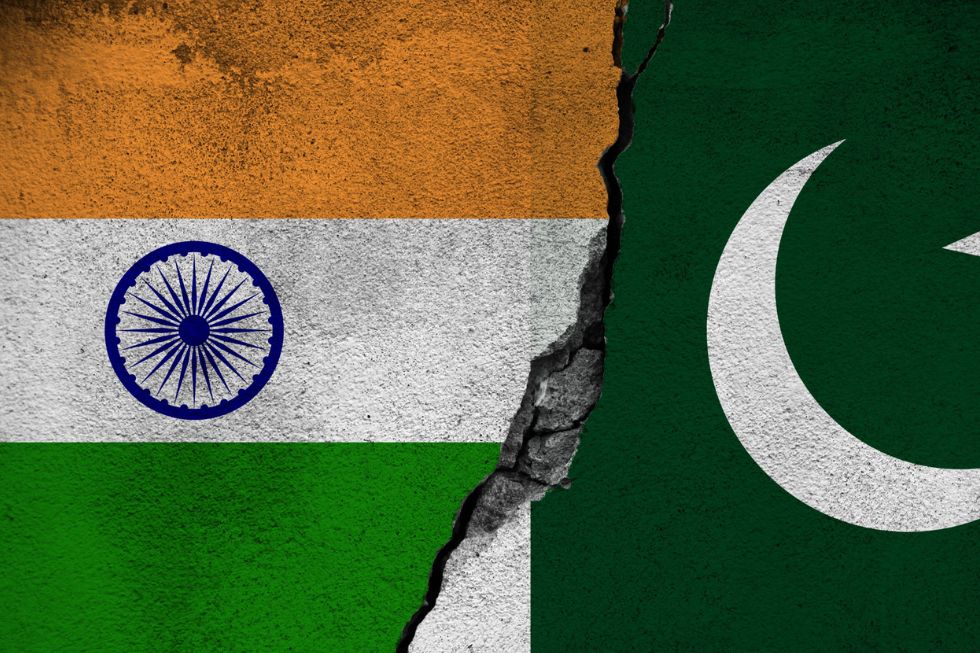
India’s principal external adversary has long used proxy warfare as strategy. Pakistan’s ISI doctrine has not so much changed as diversified. Established groups remained, but splinter outfits, front organizations and hybrid networks have grown. Cross‑border infiltrations at Pathankot and Uri; the Pulwama strike that exposed deep local radicalization; and the intermittent strikes and counter‑strikes thereafter illustrate persistence rather than episodic threats. Even kinetic responses like Balakot did not end the strategy that uses asymmetry and deniability to keep India off‑balance.
Equally dangerous is the internal dimension: the adversary now exploits interagency rivalry and institutional compartmentalization. Delhi Police, IB, NIA, RAW, technical agencies and local forces often operate in juridical and bureaucratic silos. Terror networks, by contrast, behave as unified organisms. The same pattern of missed warnings and disconnected pieces of intelligence that surfaced before Mumbai 2008, Pathankot and Pulwama likely played a role again. When a blast occurs in the capital, it almost always means someone has slipped through seams created by siloed systems and delayed information sharing.
Radicalization’s new face: educated minds, digital networks
Perhaps the most disquieting development is the changing profile of radicalized actors. Radicalization no longer happens solely in foreign camps, mosques or madrassas. It happens online, in encrypted chats, in closed professional networks and among people who outwardly appear integrated: students, doctors, engineers and academics. When professionals, especially those with social trust and networks, drift toward extremism, the risk multiplies. A radicalized doctor, for instance, can quietly influence peers, provide cover, or recruit, creating nodes of ideological contagion hard to detect through traditional HUMINT alone.
Online propaganda, curated grievance narratives, doctored content and psychological manipulation from across the border have targeted Kashmiri youth in particular. Weaponized identity and grievance, amplified through social media, create fertile grounds for quiet, credentialed radicalization. The counter to this must be more sophisticated than arrests and outreach brochures: psychological, institutional and community‑driven.
Rethinking India’s counterterror response
We must stop treating intelligence failure as a slogan and start designing systems that mirror the adversary’s unity. India needs a real‑time fusion architecture where IB, police, NIA, RAW, NTRO and other agencies don’t merely pool information but sit, analyze and act together. Fusion centers with joint analytic teams, secure shared communication, cross‑posted liaison officers and rapid decision protocols are not optional; they are essential. Countries that face persistent terror threats have invested in such integrated models; India must do the same with urgency.
Human intelligence must be rebuilt and valued alongside tech. Algorithms detect patterns; humans detect intent. Dynamic HUMINT networks across Delhi’s migrant belts, dense rental localities and transient populations, backed by community engagement and credible local interlocutors, can spot behavioral shifts before violence manifests. Counterradicalization must go inside universities, hospitals, coaching centers and workplaces. Engaging credible community influencers — senior doctors, educators and civil society voices — is more effective than generic state messaging.
Digital monitoring cells should shift from reactive collection to proactive pattern recognition: identifying ideological spread, social contagion vectors and recruitment pipelines. But surveillance must be paired with legal safeguards and community trust; otherwise, it will drive the problem underground.
Strategic signalling, covert pressure and diplomacy
India’s response should be calibrated: clear strategic signalling combined with covert pressure on handlers and facilitators rather than unhelpful grandstanding. Strengthening ISR on vulnerable corridors, improving counter‑infiltration posture and raising targeted alert levels achieve deterrent effects without immediate large‑scale kinetic escalation. Covert intelligence operations aimed at dismantling cross‑border facilitators, chokepoints in financing and intermediary networks create durable deterrence. Quiet, precise pressure often deters better than public sabre‑rattling.
Diplomatically, India must define the incident early for the international community and expose the hybrid ecosystem that nurtures terrorism. Renewed scrutiny of terror finance, a coordinated narrative linking strike patterns to support networks, and partnerships with the US, EU and Gulf states to increase pressure on Islamabad’s military‑intelligence complex will raise the cost of deniability. Regionally, India should deepen cooperation with Bangladesh, Nepal and Sri Lanka to choke logistical and recruitment pathways.
Political unity, institutional humility and the long view
Terrorism thrives on political polarization. The political class must resist turning every security incident into electoral advantage; unity in response deprives terrorists of the political leverage they seek. Interagency egos and hierarchical inertia must yield to shared purpose and operational humility. Victory is not the elimination of the enemy alone but the denial of opportunity: fewer recruits, fewer facilitators, fewer exploitable seams.
I end where many of us who served in uniform begin: the enemy is often the idea that drives someone to violence, not only the person who pulls the trigger. When ideas spread through smartphones more effectively than pamphlets, when handlers hide behind digital masks and professionals slip toward ideological distortion, our response must be intellectual, institutional and unrelenting. Treat each blast as a lesson, not merely a headline. If we do, Delhi will recover and become harder to hurt; if we do not, the space between attacks will remain the enemy’s greatest ally.
“As a soldier, I learned long ago: victory is not the elimination of the enemy, but the elimination of his opportunity.”