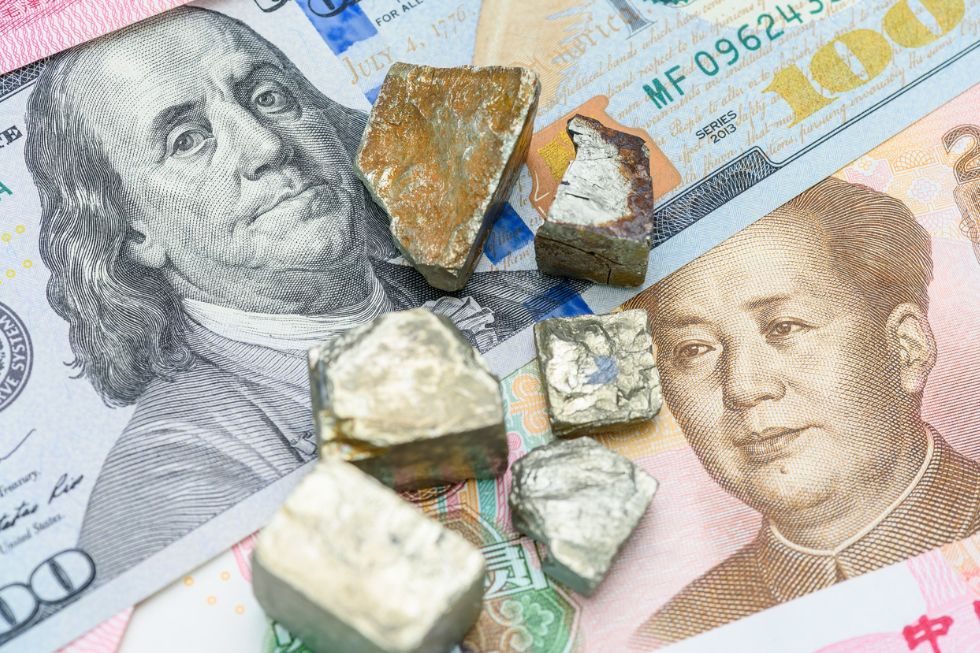

US President Donald Trump’s latest dance of threat and reassurance toward Beijing—escalating tariff rhetoric, then stepping back—captures a deeper transformation: US–China competition has become a structural geoeconomic rivalry that spans trade, technology, critical materials and strategic geography. Markets read calm when the White House signals restraint; Beijing reads leverage when China controls inputs that power modern industry. Both are right. The defining question is resilience: which side can manage interdependence while sustaining power amid shocks?
Trump’s tariff theatrics followed Beijing’s tighter export controls on rare-earths and related materials that underpin semiconductors, batteries and many defense-critical systems. Those Chinese moves spooked markets, pushing Treasury officials to counsel restraint. The administration’s tactical retreat—softening tariff threats and publicly reassuring investors—was partly about market stability and partly about optics ahead of a Trump–Xi meeting. Yet the fundamental contest remains unresolved: Washington insists China rescind export controls; Beijing refuses, viewing such controls as one of its last asymmetric levers. The result is managed cycles of confrontation and détente that stabilize markets without settling strategic rivalry.
The October 30 Trump–Xi meeting in Busan illustrates this managed rivalry. Leaders agreed to delay new US tariffs and to defer parts of Beijing’s export-control regime for a year. China promised purchases of US soybeans and renewed pledges to curb precursor chemicals used in fentanyl production; Washington modestly lowered some tariffs. But the scope of the deal was narrow. Grander topics—industrial reform in China, rebalancing toward domestic consumption, or deep structural changes—were absent. The draft 15th Five-Year Plan underscores that Beijing remains committed to export-oriented upgrading and strategic autonomy in science and technology. China’s low household consumption share and persistent trade surplus mean friction with Washington will continue unless deep reforms occur.
Technology policy highlights another strategic tension. The US has alternated between strict export controls and selective licensing that preserves market linkages. The administration’s reported decision to allow limited sales of Nvidia’s H20 chips to China—capping China’s share of revenue from those sales—reveals a transactional approach: keep Beijing sufficiently dependent on US chips to retain leverage while trying to slow Chinese autonomy. This “keep them addicted” strategy may buy near-term leverage but risks accelerating China’s push for semiconductor self-sufficiency. Biden-era doctrine favored “small yard, high fence” containment of critical technologies; Trump’s pragmatism mixes containment with calibrated trade.
Beyond trade and chips, geography is remaking strategic competition. The Arctic, long a remote theater, is now central to great-power rivalry. Melting ice opens shipping routes, exposes energy and mineral reserves, and shortens missile trajectories between Russia and North America. Russia is reinforcing northern infrastructure; China styles itself a “near-Arctic state,” seeking presence and access. Western logistics remain fragile in polar storms and sparse infrastructure, exposing vulnerabilities. The Arctic’s strategic value is multi-dimensional—resources, transport, surveillance and orbital intelligence—and resembles the militarization of space: capability constellations (satellites, icebreakers, sensors, missile defenses) matter more than population or territory.
Legal ambiguity compounds the Arctic challenge. UNCLOS Article 234 allows coastal states to regulate navigation in ice-covered waters to prevent pollution, a clause Russia uses to justify restrictive control of the Northern Sea Route. Beijing’s near-Arctic posture tests conventional interpretations. The region exemplifies a 21st-century sovereignty: control extends into technological and logistical constellations, not only land or maritime borders.
Artificial intelligence is the strategic high ground. The US pursues frontier models and a sprint toward AGI—large, general-purpose systems with transformational potential. Officials warn China may be only months behind in certain capabilities. China’s strategy is different: systemic diffusion of “embodied AI” across manufacturing, robotics and sensors, embedding intelligence into machines and factories rather than chasing a single AGI breakthrough. China aims for ubiquitous AI adoption across firms to strengthen industrial resilience. The two models—US’s large models and China’s machine-integrated approach—both matter. Dominance in the AI stack will influence future warfare, governance, standards and ethics. Competition over standards, openness and export rules will shape which norms prevail globally.
Materials and supply chains are the other pillar of leverage. China refines the vast majority of the world’s rare earths and many critical minerals; its export controls can ripple through global auto, defense and clean-energy supply chains. Washington can weaponize access to high-end chips; Beijing can weaponize inputs. China’s measures that extend jurisdiction over products incorporating Chinese-processed inputs mirror America’s Foreign Direct Product Rule but project power further downstream—the “big square, great wall” doctrine versus America’s “small yard, high fence.” Recent European disruptions in automotive production after Chinese curbs on gallium and germanium underscore the asymmetry’s reach.
This dynamic—weaponized interdependence—erodes post–Cold War norms that separated markets from politics. Export bans, sanctions and export-control regimes create a legal gray zone ill-suited to algorithmic controls and cross-border data flows. The WTO’s security exceptions were not built for algorithmic export regimes or global data governance. Multilateral institutions struggle; minilateral coalitions such as AUKUS, the Quad and NATO’s Arctic coordination are rising to provide agility and trust, but they also accelerate fragmentation and competing regulatory spheres.
Trump’s approach—transactional escalation to extract concessions, followed by tactical accommodation—reflects political instincts and deal-making acumen. It aims to exploit perceived asymmetries: that China needs US markets more than the US needs Chinese supply chains. That calculus is increasingly fragile. Chinese exports to the US have fallen recently, but Beijing’s global trade flows and its control over refining and battery components give it latent leverage. The US still commands financial and technological chokepoints; China controls many material arteries underpinning those chokepoints.
In the end, resilience—not raw innovation or short-term dominance—will determine outcomes. The future balance depends on which state can reduce exposure to coercion while maintaining innovation, alliance cohesion and stable markets. Weaponized interdependence cuts both ways: measures designed to coerce expose vulnerabilities in supply chains, finance and logistics. Deterrence today requires stabilizing markets as much as projecting military strength. The winner will be the polity that best weaves redundancy, trusted partners, diversified supplies and domestic capacity into a durable architecture of power.
In a world where financial, technological and climatic shocks ripple globally in seconds, resilience is more than endurance; it is the capacity to absorb shocks, retain options and keep alliances intact. That capacity will shape the next era of global order.
[Lee Thompson-Kolar edited this piece.]
The views expressed are the author’s own and do not necessarily reflect Fair Observer’s editorial policy.