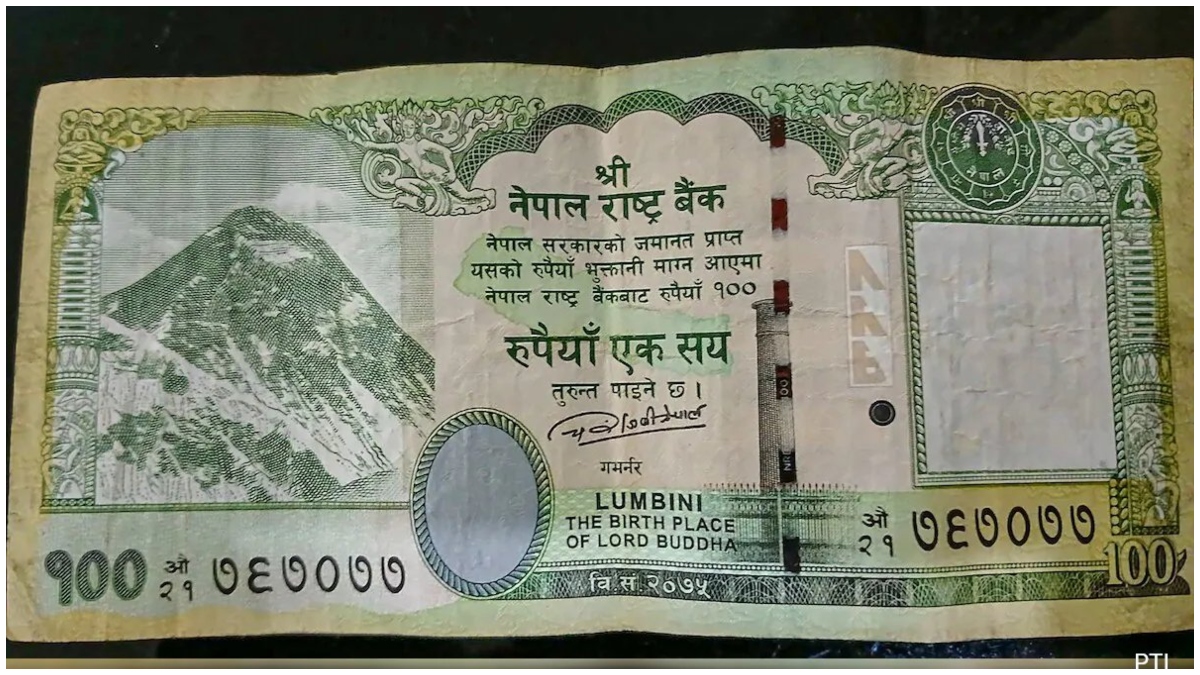

Nepal’s central bank released a new Rs 100 note on Thursday that features a revised national map including the disputed Kalapani, Lipulekh and Limpiyadhura areas — territories India also claims. The note shows Mt Everest on the left and a rhododendron watermark on the right, with a faint green map of Nepal printed at the centre. The Ashok Pillar appears near the map along with the text “Lumbini, the birthplace of Lord Buddha.” The reverse depicts a one-horned rhino. The note includes a security thread and an embossed black dot to help visually impaired people recognise it.
The Nepal Rastra Bank (NRB) issued the note bearing the signature of former Governor Maha Prasad Adhikari. Nepal’s parliament had endorsed an updated map in May 2020 during Prime Minister K. P. Sharma Oli’s government, adding Kalapani, Lipulekh and Limpiyadhura. An NRB spokesperson told PTI that the map already appeared on the old Rs 100 note and has been revised to reflect the government’s decision.
India maintains that Lipulekh, Kalapani and Limpiyadhura are its territory. New Delhi had reacted strongly in 2020, calling Nepal’s revised map a unilateral act and warning that such an artificial enlargement of territorial claims was unacceptable. Among Nepal’s banknote denominations, only the Rs 100 note carries the country’s map; other denominations such as Rs 10, Rs 50, Rs 500 and Rs 1,000 do not. Nepal shares a border of more than 1,850 km with five Indian states: Sikkim, West Bengal, Bihar, Uttar Pradesh and Uttarakhand.