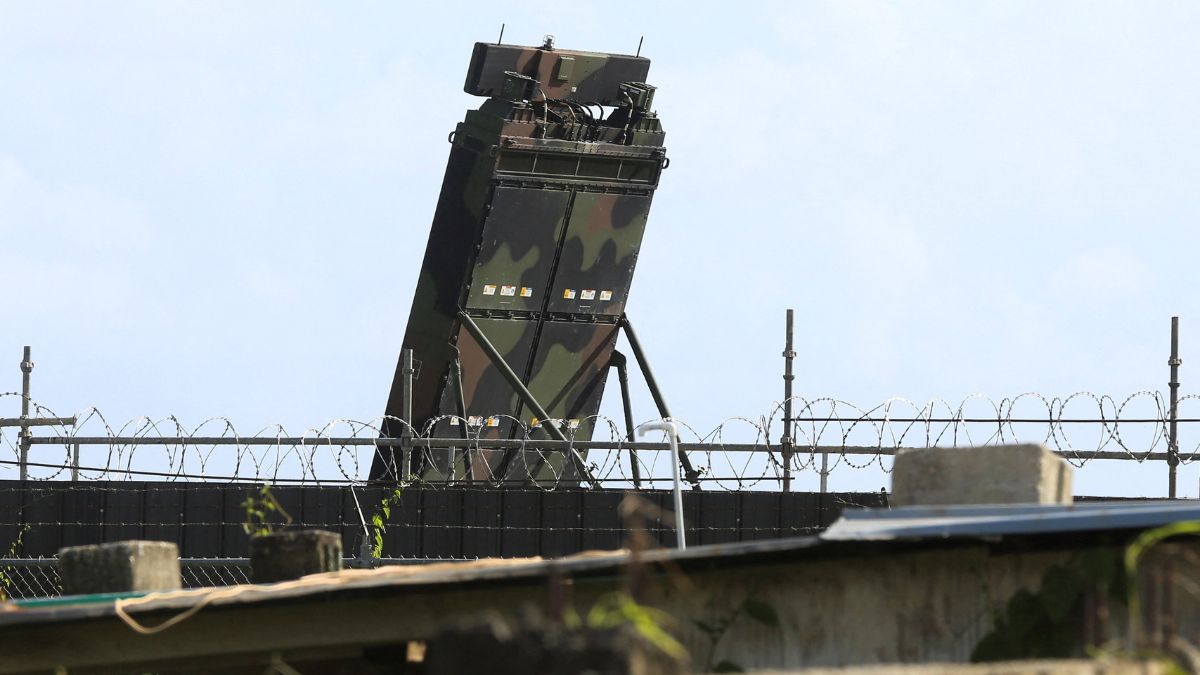

Amid President Donald Trump’s call to close airspace around Venezuela, speculation has grown that a U.S. land invasion could be imminent. Reports say more than 10 U.S. warships, including the Navy’s newest carrier USS Gerald R. Ford, are converging on the Caribbean.
A Marine Expeditionary Unit capable of amphibious assault has reportedly been deployed. Guided-missile destroyers USS Gravely and USS Stockdale, and guided-missile cruisers USS Lake Erie and USS Gettysburg are said to be operating in the region. The Gerald R. Ford Carrier Strike Group carries nine air wings—more than 70 aircraft. Other ships include the Wasp-class amphibious assault ship USS Iwo Jima, which can carry up to six AV-8B Harrier II attack aircraft.
Up to 2,200 Marines from Camp Lejeune and Marine Corps Air Station New River in North Carolina have been stationed in the Caribbean. Reports put total military personnel in the area at about 15,000, including shipboard Marines and roughly 5,000 personnel at bases in Puerto Rico. The U.S. has reactivated the Roosevelt Roads naval base in Puerto Rico to support the deployment, framed in part as an effort to curb narcotics trafficking by assisting the Coast Guard and Department of Homeland Security.
The administration says this posture is aimed at combating drug trafficking and has denied it signals an imminent attack. Republican Senator Markwayne Mullin told CNN that the U.S. had given Venezuelan President Nicolás Maduro the opportunity to leave the country, suggesting options such as travel to Russia or elsewhere.
Critics argue the moves—cited alongside reports of deadly strikes—raise constitutional and human rights concerns and lack clear justification for sending Americans into combat. Others view the buildup as psychological pressure intended to force Maduro’s resignation or to encourage defections among his officials and military.